
Automation as a growth strategy: why a business can’t scale without systems
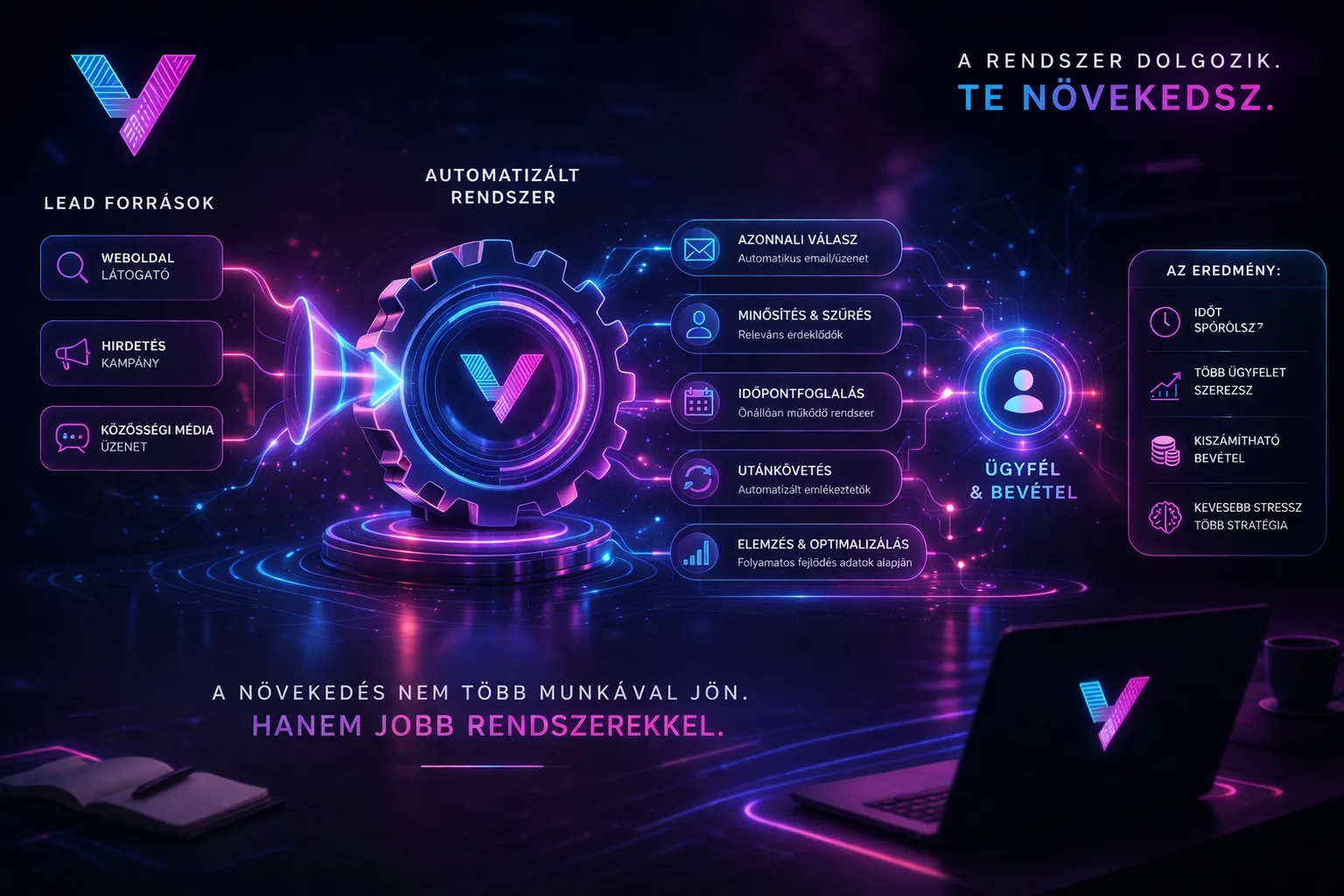
Growth is an obvious goal for most businesses, yet surprisingly few companies are truly able to scale their operations sustainably. The reason isn’t a lack of market, limited demand, or in many cases even the quality of the service — it’s that operations are fundamentally built on manual logic.
Manual operations can be efficient up to a point. As long as the number of clients is low, processes are manageable and information can be kept in your head, there’s no pressure to build systems. But problems don’t appear suddenly; they appear gradually, and that’s exactly why they often go unnoticed.
At first there are only small delays. A reply doesn’t go out on time. An enquiry gets lost. A follow-up is missed. On their own these seem insignificant, but over time they seriously affect conversion and the client experience.
As the load grows, these problems add up and the system starts to become unstable. Not because it was badly built, but because there’s actually no system at all — just ad hoc solutions stacked on top of each other.
In this context, automation isn’t a technology question but a strategic decision.
It’s not about replacing human work, but about structuring operations — so that processes don’t depend on individual performance but run in a reproducible way.
In a well-built system, every step is defined in advance. When a lead contacts the business, there’s no improvised reaction; a pre-designed process starts. That process is not only faster but also more consistent.
One of the biggest advantages of automation is that it eliminates randomness. Conversion no longer depends on who happens to be busy, paying attention, or remembering a particular task. The system ensures that every lead is handled at the same level of quality.
This is especially important with premium clients, where first impressions and response time play a critical role.
The other key element of automated systems is measurability. As long as a process is manual, it’s hard to analyse. You can’t know exactly where leads are lost, where they get stuck, and what does or doesn’t work.
Once the process is structured and automated, however, every step becomes measurable. This enables continuous optimisation, which over time can have an exponential effect on performance.
One of the most common mistakes is that businesses start automating too late — when the problems are already obvious, the load is heavy and operations are hard to control. At that point the transition is much harder and often involves compromises.
The real advantage shows up in companies that think in systems from an early stage and build their processes deliberately.
Because in the end, growth isn’t about more work.
It’s about better systems.
And as long as a business relies on its own time and energy, there will always be a ceiling.
Systems break through that ceiling.